Product Details
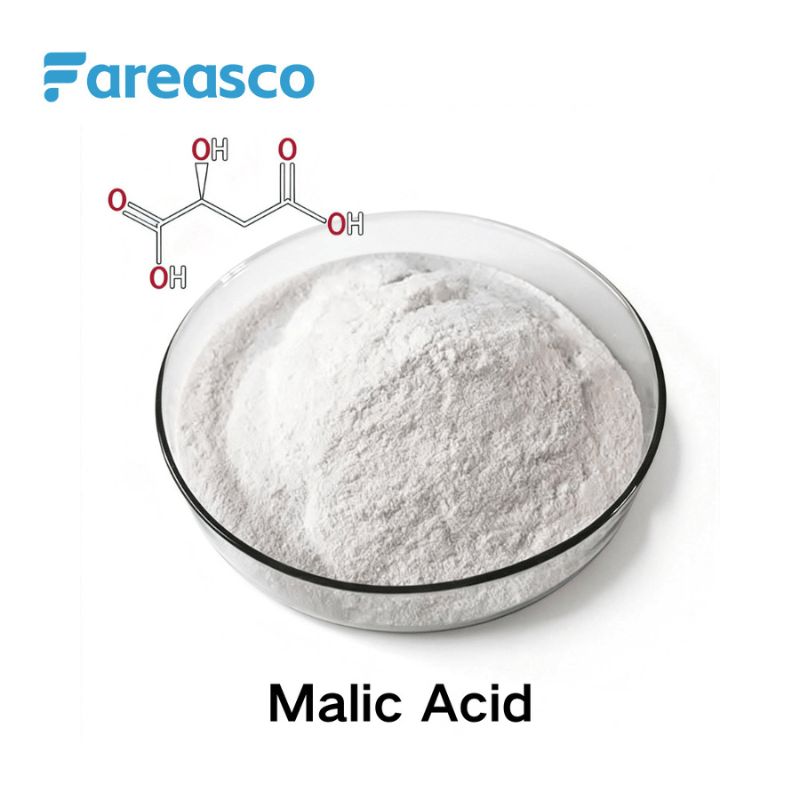
Malic acid
- Malic Acid (DL-Malic Acid / L-Malic Acid)
- CAS No.: 617-48-1/97-67-6
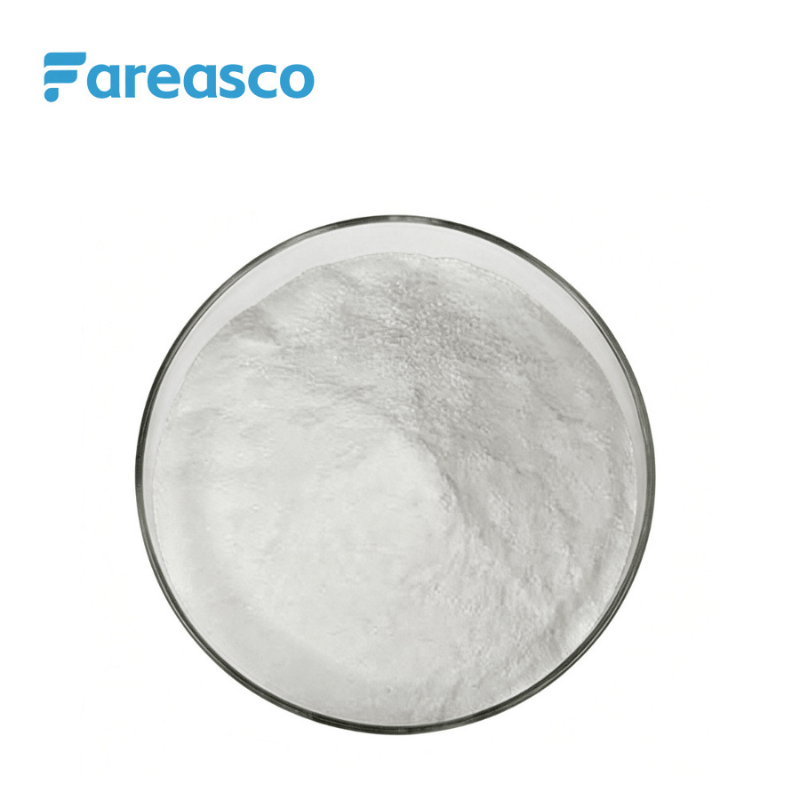
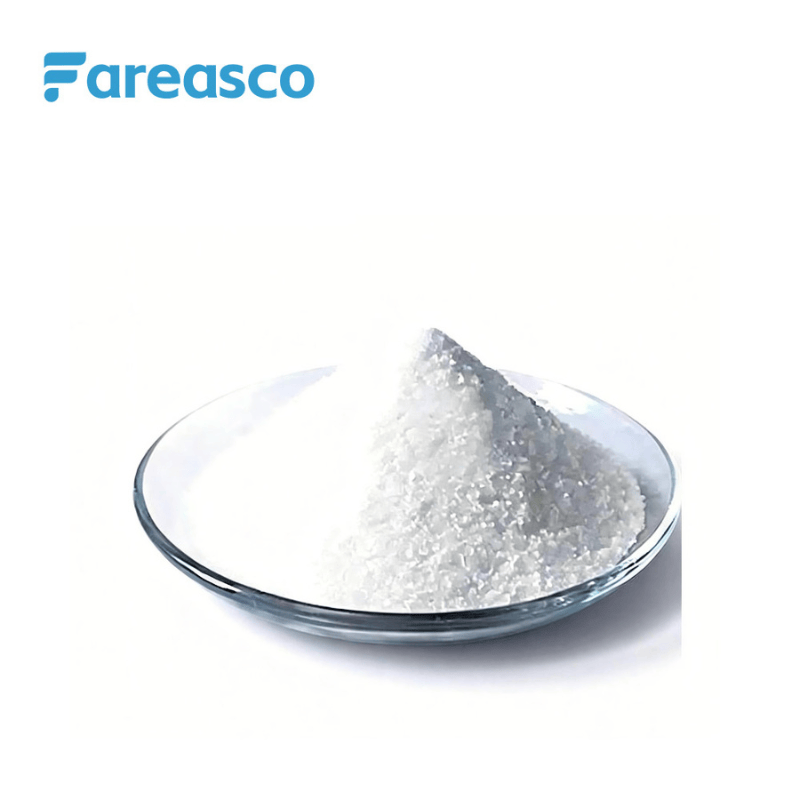
- Appearance: White crystalline powder
- MF (Molecular Formula):C₄H₆O₅
- Purity: ≥ 99%
- Certification:ISO/HALAL/KOSHER/BRC
- HS Code:291899
Malic Acid (also known as hydroxysuccinic acid or 2-hydroxybutanedioic acid) is a dicarboxylic acid with the molecular formula C₄H₆O₅. It is a white, odorless, crystalline solid that is hygroscopic (tends to absorb moisture from the air). The molecule has an asymmetric carbon atom and naturally occurs as the L-isomer (L-malic acid), but can also be produced as D-malic acid or the DL-racemic mixture
Main Applications:
Food & Beverage Industry: Extensively used as an acidulant in fruit juices, carbonated soft drinks, jams, wines, candies, and baked goods. It provides a smooth, persistent tartness (relative sourness: 75 vs. citric acid at 100) and enhances fruit flavors. It also functions as an antioxidant, pH control agent, and preservative, inhibiting the growth of yeasts and certain bacteria.
Pharmaceutical & Oral Care: Used to treat dry mouth (xerostomia), with sprays or lozenges effectively relieving symptoms. Incorporated into mouthwashes and toothpaste as an acidulant and flavor modifier to mask bitter tastes and provide refreshing sensations. As an alpha-hydroxy acid (AHA), it is also used in dermatological treatments (e.g., with benzoic and salicylic acid for burns and ulcers).
Cosmetics: Used at low concentrations as a pH adjuster in products such as facial cleansers, creams, and self-tanning lotions. Its derivative, malic acid monolaurylamide, serves as a skin cleansing agent. The CIR Expert Panel has concluded that malic acid and sodium malate are safe for use as pH adjusters in cosmetic formulations.
Industrial Applications: Used in metal cleaning and finishing, textile finishing, electroless plating, and paint manufacturing. Polymers of L-malic acid (poly(L-malic acid)) have biomedical applications as non-toxic, water-soluble drug carriers.
Pharmaceutical Excipients & Nutraceuticals: Serves as an acid source in effervescent tablets and lozenges. Used as a synergist with other antioxidants (e.g., BHT) to retard oxidation of vegetable oils. Functions as a chelating agent and buffering agent in pharmaceutical formulations.
Specification:
Testing Items | Standard |
Appearance | White crystalline powder |
Assay (as C₄H₆O₅) | ≥ 99% |
Specific Rotation | -0.1° to +0.1° |
Moisture Content | ≤ 0.5% |
Heavy Metals (Pb) | ≤ 10 ppm |
Arsenic (As) | ≤ 2 ppm |
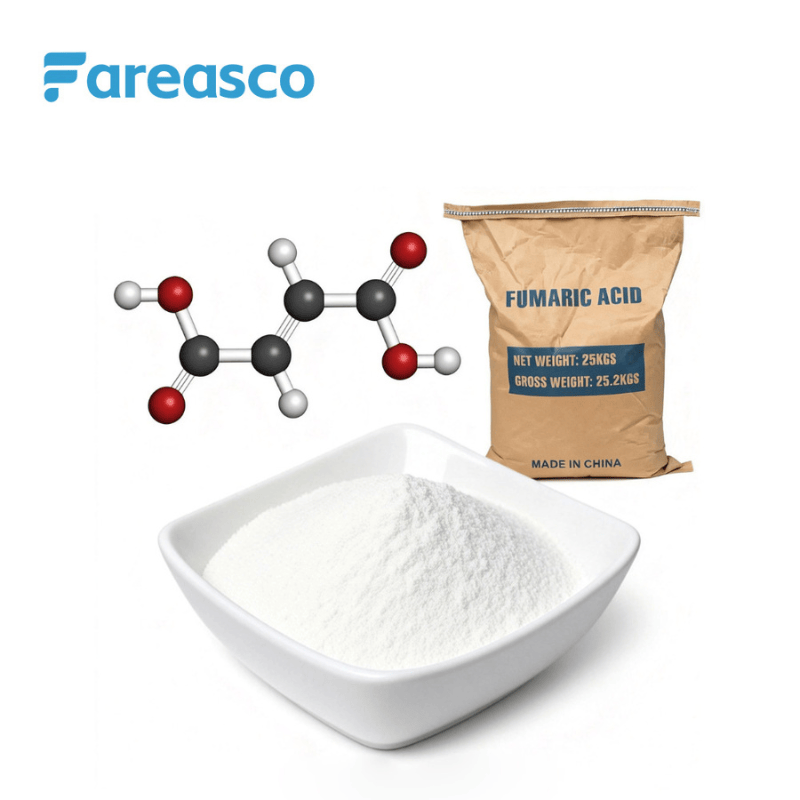
Fumaric Acid | ≤ 1.0% |
Maleic Acid | ≤ 0.05% |
Storage : Store in a tightly sealed container, in a cool, dry, and well-ventilated place, away from direct sunlight.
Packaging: 25kg bags or customized packaging available upon request.
Shelf Life : 24 months